In the world of cloud computing and DevOps, understanding how the internet works is crucial. Whether you’re deploying applications on AWS, managing cloud infrastructure, or orchestrating containers, the internet is the backbone that connects everything. In this post, we’ll break down the concepts step by step and see how AWS leverages the internet for cloud operations.
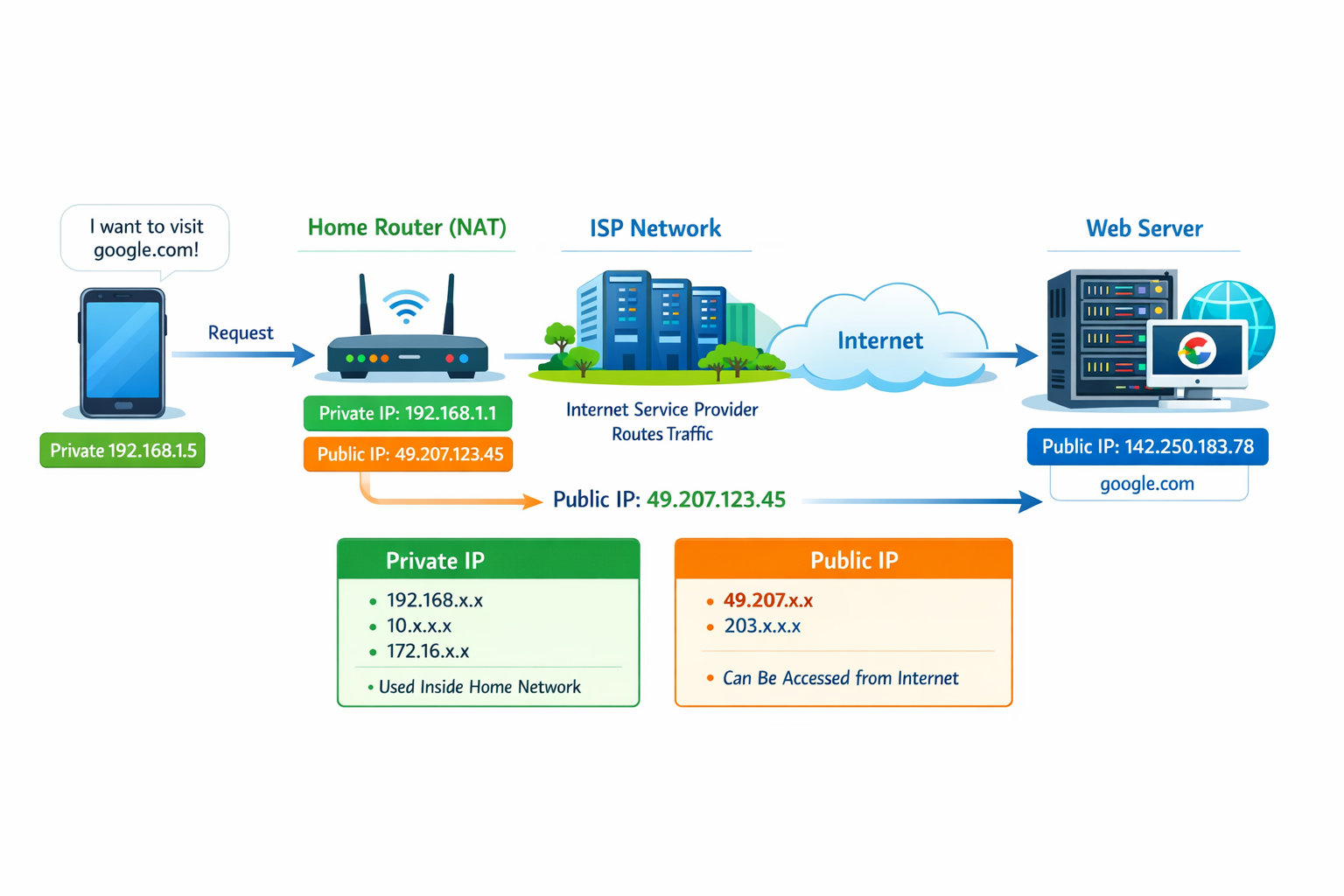
1. The Internet: A Quick Overview
The internet is essentially a global network of connected computers and devices. Every device on the internet communicates using IP addresses, which act like unique home addresses in the digital world.
- IP Address: A unique identifier for a device on a network.
- DNS (Domain Name System): Translates human-friendly domain names (like
example.com) to IP addresses. - Packets: Small chunks of data that travel across networks to reach their destination.
2. AWS and the Internet
AWS (Amazon Web Services) provides cloud infrastructure that relies heavily on the internet. Some key AWS services that interact with the internet include:
- EC2 (Elastic Compute Cloud): Virtual servers in the cloud that need public/private IPs to communicate.
- S3 (Simple Storage Service): Object storage accessible via internet endpoints.
- VPC (Virtual Private Cloud): A logically isolated network in AWS, allowing you to control inbound and outbound traffic.
How it works:
- Your AWS EC2 instance is inside a VPC.
- Each instance has a private IP (for internal communication) and optionally a public IP (to communicate over the internet).
- A Subnet inside a VPC can be either public or private.
- Public subnet: Has a route to the internet via an Internet Gateway (IGW).
- Private subnet: Usually has no direct internet access and communicates via a NAT Gateway.
- When an instance in a public subnet sends data to the internet, the traffic passes through:
- Route Tables → Internet Gateway → Internet
- Responses come back through the same path, reaching your instance via its public IP.
3. DevOps Perspective
In DevOps, the internet plays a key role in CI/CD pipelines, monitoring, and cloud orchestration:
- Code Deployment: Jenkins, GitHub Actions, or GitLab CI/CD servers use the internet to push code to AWS.
- Infrastructure as Code (IaC): Tools like Terraform or CloudFormation interact with AWS APIs over the internet.
- Monitoring & Logging: Services like CloudWatch, Prometheus, or ELK stack pull and push metrics and logs over the network.
- Containers and Orchestration: Kubernetes clusters in AWS communicate internally, but public APIs or external services still use the internet.
4. Public vs Private IPs in Cloud
- Public IPs: Allow your resources to be accessed from anywhere on the internet.
- Private IPs: Used for internal communication within a VPC. These are not reachable directly from the internet.
- Why private IPs?
- Security: Keeps internal systems isolated.
- Resource efficiency: Conserves the limited pool of public IPs.
- NAT (Network Address Translation): Lets private instances access the internet without exposing their private IPs.
5. How Data Flows in AWS
Here’s a simplified flow for a web application hosted on AWS:
- User enters
www.example.comin the browser. - DNS resolves the domain to a public IP of an EC2 instance or load balancer.
- Request reaches AWS via the Internet Gateway.
- EC2 instance in a public subnet receives the request.
- Instance processes the request and returns the response via the same path.
For private subnets:
- Requests from internal services go through a NAT Gateway or Load Balancer.
- External requests are not allowed directly, enhancing security.
6. Security Considerations
In AWS and DevOps, internet security is critical:
- Security Groups: Virtual firewalls controlling inbound/outbound traffic at the instance level.
- Network ACLs: Control traffic at the subnet level.
- VPC Peering & VPNs: Secure connections between networks, sometimes avoiding the public internet.
7. Conclusion
The internet is the invisible network that connects your devices, applications, and cloud infrastructure. In AWS and DevOps:
- Understanding public/private IPs, NAT, and routing is key.
- VPCs, subnets, and gateways give you control over internet access.
- DevOps pipelines and cloud services depend on reliable, secure internet connectivity to function efficiently.
Thankyou :)!